Malnutrition Project
Background
Kisiizi Hospital Malnutrition Project was established in 2015 as a collaboration between visiting paediatricians and local medical and nursing staff in order to raise the standards of care available to malnourished children admitted to Kisiizi Hospital.
Malnutrition is estimated to affect around a third of all children in Uganda under the age of five years and evidence suggests it underpins at least half of all deaths in the same age group. Malnutrition has wide ranging negative effects on child development, permanently affecting not only growth but also development, cognition, and academic performance.
Kisiizi Hospital has provided inpatient care for children with malnutrition since its founding 60 years ago. Primary care is very limited and families rarely present to hospital unless their children are seriously unwell with another illness. Despite this, most children leave the hospital before they are well due to the prohibitive cost of admission (despite subsidies) for families who are the poorest in their community. Data collected in Kisiizi suggests that at least 40% of deaths on the children’s ward are malnutrition related.
What does the project involve?
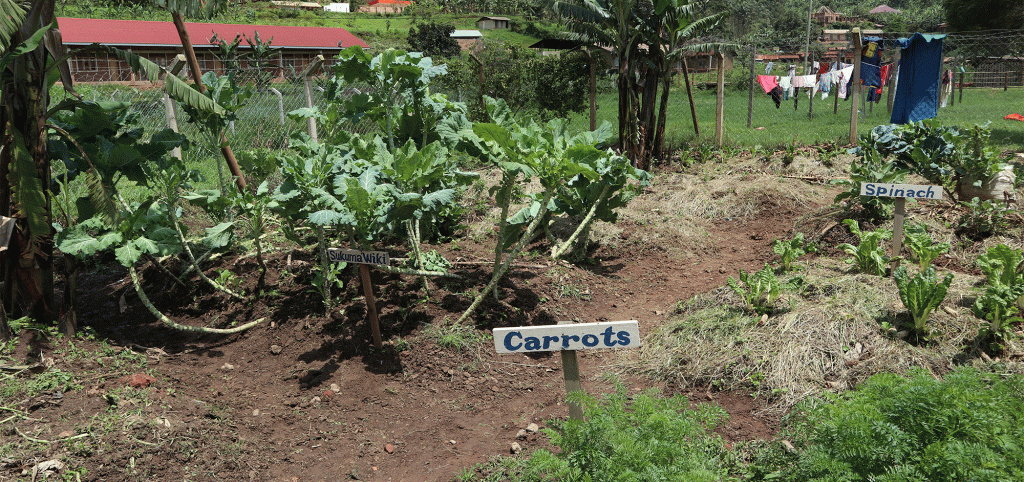
Since 2015, the standard of care provided to inpatients with malnutrition has been brought into line with WHO standards for diagnosis and management of acute malnutrition with medical complications through collaborative updating of guidance. Capital was generated by Kisiizi Partners so Kisiizi Hospital could produce and provide their own ready to use therapeutic food (fortified peanut butter) free to inpatients alongside high energy milk – key constituents of nutritional rehabilitation. A demonstration garden and chicken coop were also created to provide free food for malnourished inpatients. Regular giving was established through donors to try to support the running costs of the project.
What is currently happening?
The hospital now receive a government supply of free ready to use therapeutic food. They employ an experienced paediatric nurse as their Nutrition Project Co-ordinator to run activities alongside an assistant. The team has begun to conduct community outreach visits to vulnerable families including education, peer support and provision of chickens and vegetable seeds, where suitable to support families. Kisiizi Partners aim to fund all activities to try to minimise the costs of admission for families – this makes children much more likely to stay in hospital until they are fully recovered and reduces the financial strain on families.
What is the plan for the future?
Managing children who present to hospital with acute malnutrition is the tip of the iceberg.
Most children if identified early could be supported and managed in the community before they became critically unwell which would allow them not only to survive malnutrition but to thrive in spite of it. This would also reduce the financial burden of hospital admissions on families. With more financial support, we could extend the project further into the community and support more families and children. We would also like to further reduce the financial burden of hospital admission for families whose children are malnourished. Income generation projects (for example linked to the Kisiizi Bag Project) would allow parents to make up for the loss of income/farming time they incur whilst accompanying children to hospital. This would mean it was more likely that children would stay until they were properly better which would reduce the risk of them needing to be readmitted and increase the likelihood of meaningful and lasting recovery.
How you can help?
If you would like to give regularly to the malnutrition project, we will be able to support our colleagues in Kisiizi in this vital and life changing work which has the potential to break poverty cycles for children and families. If you have a particular or professional interest in this area, please feel free to contact us for further information. If you are a medical student or healthcare professional interested in getting involved in the work of the project, please do get in touch and we can discuss how we might support you with this.